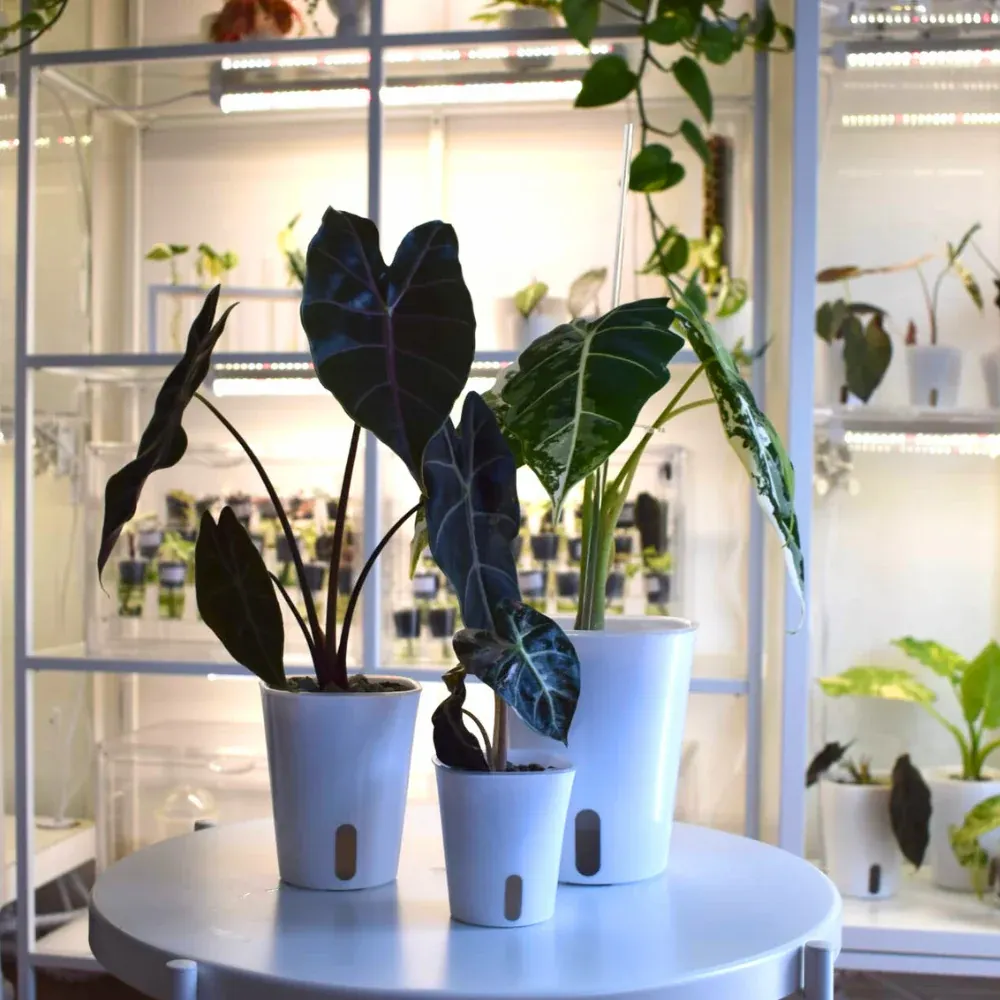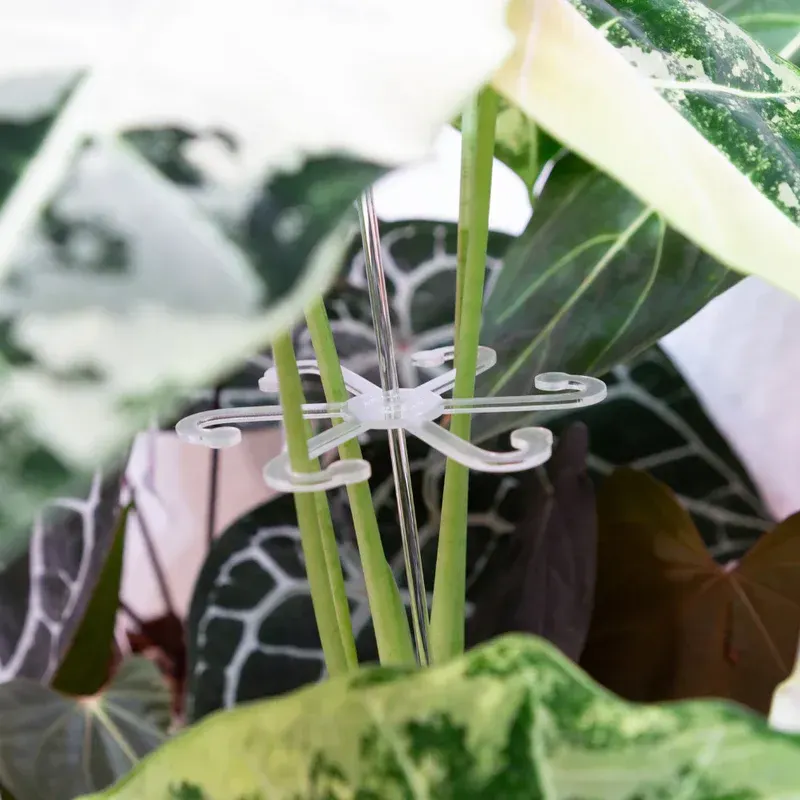
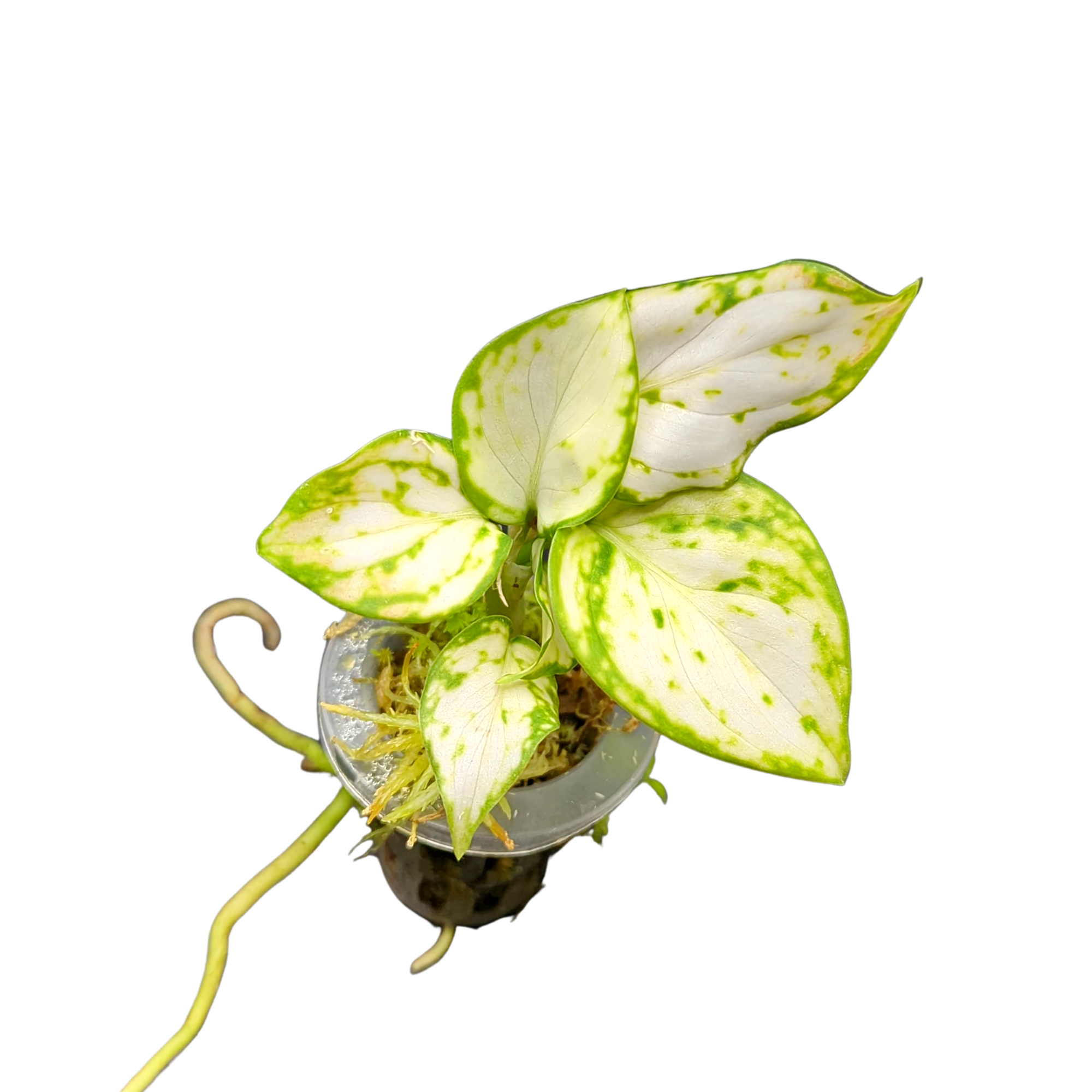
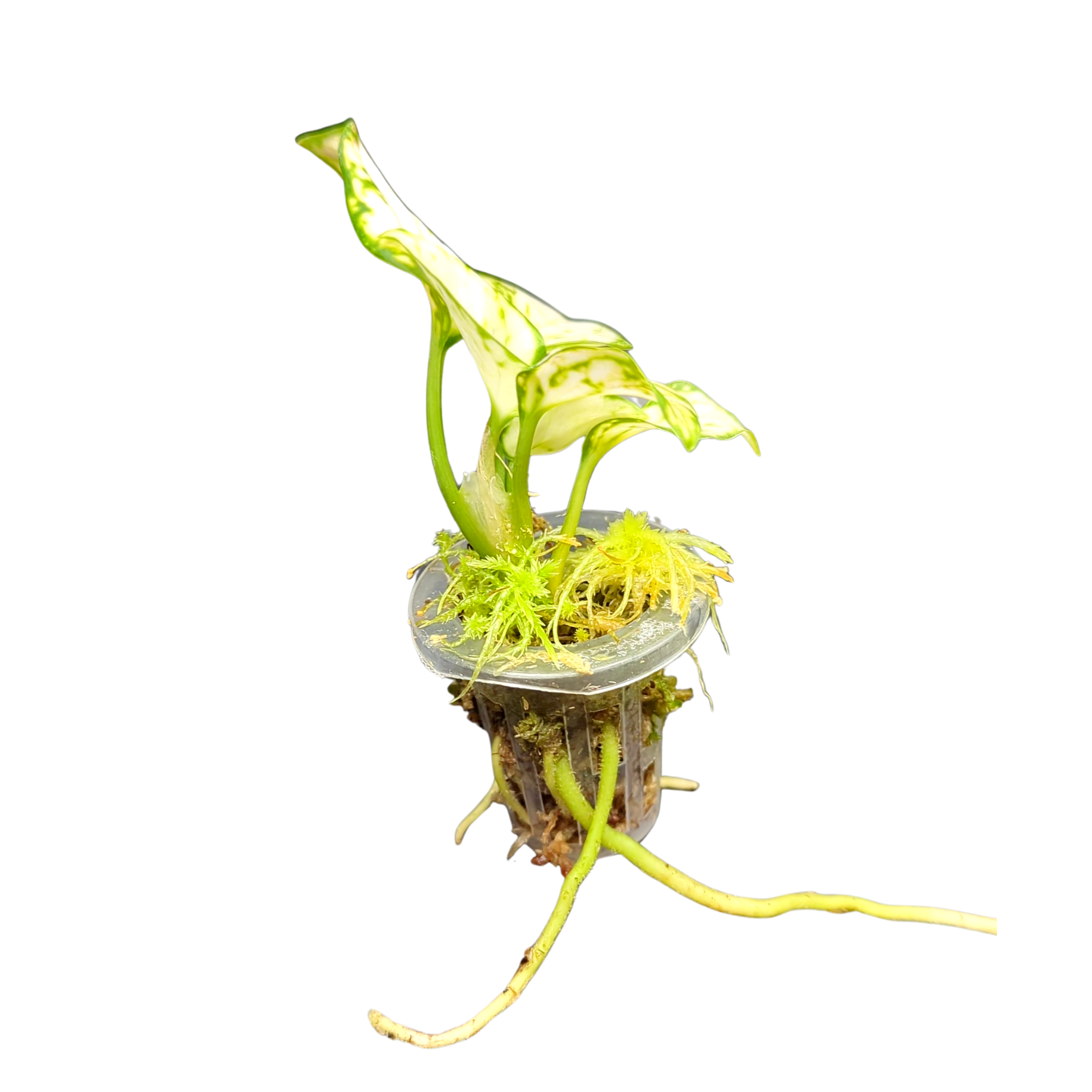
Baby Aglaonema commutatum 'White Valentine' + self-watering planter
€5.45*
% €8.45* (35.5% saved) previously €8.45*Delivery time: 1 - 2 days, Shipping with Heatpack
Aglaonema ‘White Valentine’ Baby – Your Work of Nature's Art
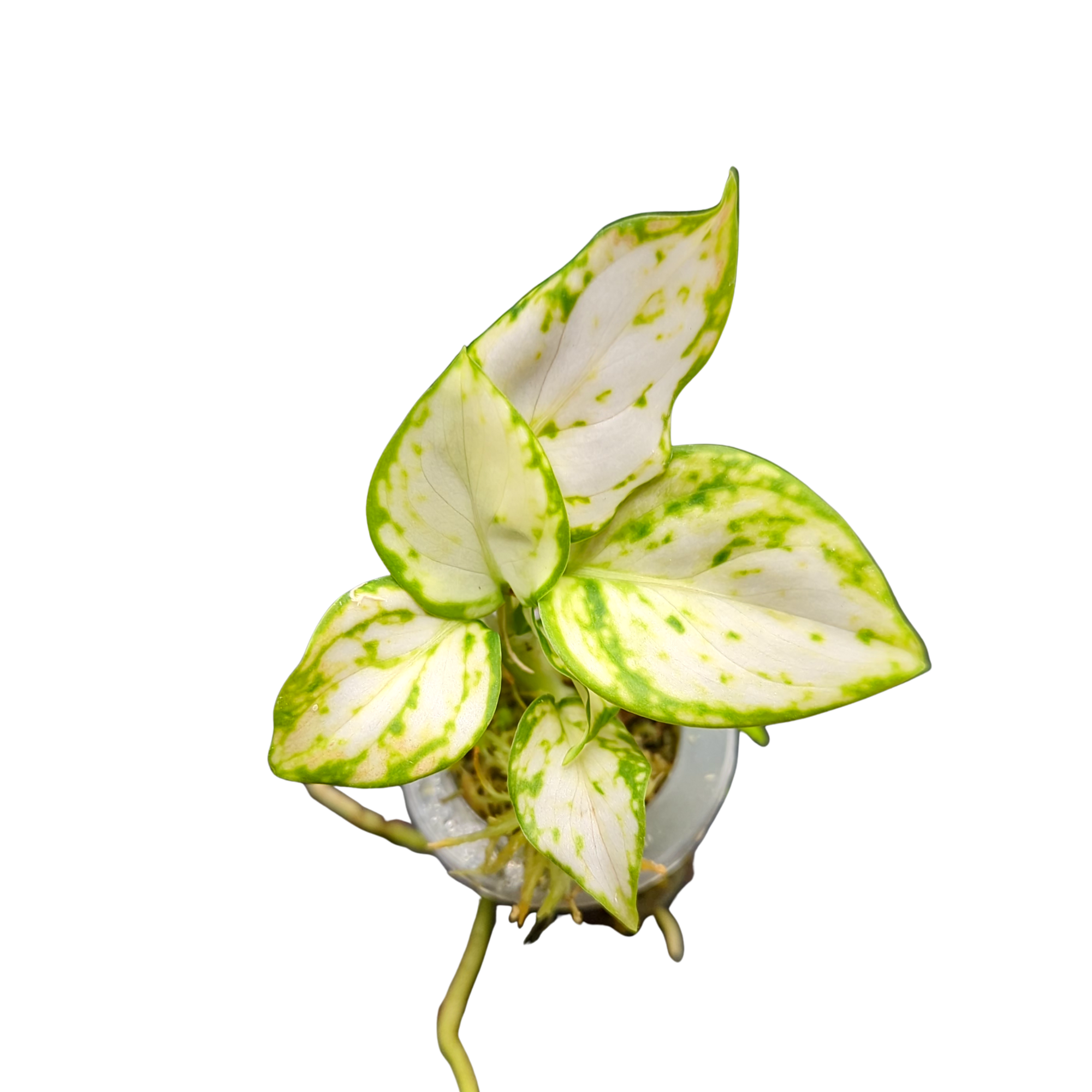
A compact start into the collector's class: Aglaonema ‘White Valentine’ Baby presents soft, medium-green leaves with fine cream to white variegation that spreads across the leaf like speckles and clouds. Its cultivar background lies in the Southeast Asian Aglaonema group, known from the shady undergrowth of tropical forests from Northeast India to New Guinea. Botanically interesting are the typical arum-family inflorescence (spadix/spathe) and the later bright red berries; in terms of cultural history, the long breeding tradition in Asia and Florida is notable. This baby plant was propagated using high-quality in-vitro (TC) methods: ensuring uniform growth, genetic stability, and a clean start.
Character & Appearance: What Makes This Selection Stand Out
- Color Effect: soft medium-green with white to cream-colored speckles and streaks; the pattern appears loosely speckled to cloudy depending on the light.
- Leaf Shape: classic lanceolate to elliptical, with 5–8 clearly visible side veins, a common genus indicator to distinguish it from Dieffenbachia.
- Habit: bushy and compact, multi-stemmed; ideal for shelves, sideboards, and display cabinets.
Origin & Natural Environment: Context for the Aesthetic
Aglaonema is native to the humid-warm, shady forest floors of South and Southeast Asia, extending to New Guinea. The plants live in the undergrowth, where diffuse light, consistently high humidity, and warm temperatures dominate. This ecological framework explains the wide range of leaf patterns and textures, which have been further differentiated in the breeding of cultivar lines like ‘White Valentine’.
Botanical Specialities: More Than "Just Pretty"
- Inflorescence: typical arum-family structure consisting of a spadix (densely packed individual flowers) and a surrounding spathe. After flowering, red berries containing one seed are formed.
- Genus & Family: Aglaonema belongs to the Araceae (arum family) and includes numerous species and cultivated forms that are primarily selected for their ornamental foliage.
- Cultivation History: in Western collections as an ornamental plant since the 19th century, with great momentum from Asian and US breeding programs.
Classification in the Cultivar Spectrum: Name, Differentiation, Related Terms
The exact cultivar name is Aglaonema ‘White Valentine’. For orientation in search results, similar names are sometimes used or confused in trade. Important: ‘Lady Valentine’ is a pink-patterned selection and is not identical to the white-green ‘White Valentine’ described here. Another different, white comparison variety that occasionally appears is ‘Snow White’, which also displays cream-white patterns but represents a distinct lineage.
Format "Baby": Why Starting Small Makes Sense
As a baby plant, ‘White Valentine’ already shows its characteristic white markings but remains compact. This makes placement easier and allows you to watch the development from juvenile to mature ornamental foliage up close.
TC in a Paragraph: Why In-Vitro Propagation is a Plus Here
This baby plant comes from Tissue Culture (TC). This brings you clear advantages: genetic uniformity within the line, a hygienic, low-disease start from a sterile culture, consistent availability throughout the year, and scalable production without pressure on wild populations. The result: a reliable look and stable quality from the very first leaf.
Cultural-Historical Context: From Forest Undergrowth to Design Icon
The popularity of Aglaonema is founded on its adaptation to shady forest environments and the resulting diversity of its foliage. Breeding programs, for instance at the University of Florida and in Southeast Asia, selected lines with striking variegation, more compact growth, and high robustness. Cultivars like ‘White Valentine’ are part of this tradition of ornamental foliage selection, which has significantly expanded the spectrum of silver, white, and cream patterns.
Many Facets in Facts: Brief, Precise Highlights
- Geographic Distribution of the Genus: Northeast India to New Guinea; focus on Southeast Asia.
- Ecological Type: Undergrowth specialist, adapted to consistent warmth and diffuse light.
- Inflorescence: Spadix/spathe, later red berries; flowering is rarely seen in indoor cultivation.
- Cultivar Reality: ‘White Valentine’ is white-green; not to be confused with ‘Lady Valentine’ (pink).
- Collector's Appeal: The high-contrast, bright variegation acts as a vibrant yet calm design element, even in minimalist interiors.
Safety & Compatibility: A Sober Reminder
Like many arum family plants, Aglaonema is considered mildly toxic; plant parts are not suitable for consumption. If in doubt, place it out of reach of children and pets.
Why This Particular Selection is Compelling
Aglaonema ‘White Valentine’ Baby combines what makes the genus desirable: clear, bright leaf patterns, a compact habit, and a traceable botanical context. With TC propagation, you get an aesthetic that is reproducible and consistent. This is the point where design standards, botany, and reliability converge.
Your guide to the happy Aglaonema 'White Valentine'
Congratulations on your new flatmate! You'll see, raising your 'White Valentine' baby is easier than you thought and incredibly fun. Here are our best tips to make her feel right at home with you. Location: Where she feels most comfortable
Your Aglaonema loves light, but without direct sunlight. Think of it as a diva that likes to be in the spotlight but hates sunburn. A spot in an east or west-facing window is ideal. The more light it gets, the more intense and bright its pink and white colours will be. But it shouldn't be too dark, otherwise the beautiful pattern will fade.
Watering: The right amount of love
The rule here is: less is more! Aglaonemas don't like wet feet. Always let the top 2-3 cm of soil dry out well before you reach for the watering can again. The finger test is your best friend: feel the soil and only water when it feels dry. In winter, it needs even less water. Waterlogging is the number one enemy - so make sure that excess water can drain away easily.
Humidity: a touch of the tropicsAs a tropical beauty, it loves higher humidity. Your 'White Valentine' will thank you if you spray its leaves with low-lime water from time to time. A humidifier nearby or a bowl of water next to the plant is also a great wellness treatment for it. This is a real game changer, especially in winter with dry heating air! Nutrients: power food for gorgeous leaves
In the growth phase from spring to autumn, your baby plant will be happy to receive a portion of liquid fertiliser in half concentration every 4 weeks. This gives it the energy it needs for vigorous growth and vibrant colours. In winter, it takes a short break, so you don't need to fertilise it. Remember: you're growing a baby - start slowly and give it time to grow!
You can do it! Every big, beautiful plant started out small. Enjoy the process and get in touch if you have any questions. We are here for you!
Login